Blue Ocean Content YouTube Mastery Review (2026): Every Framework, Honest Limitations
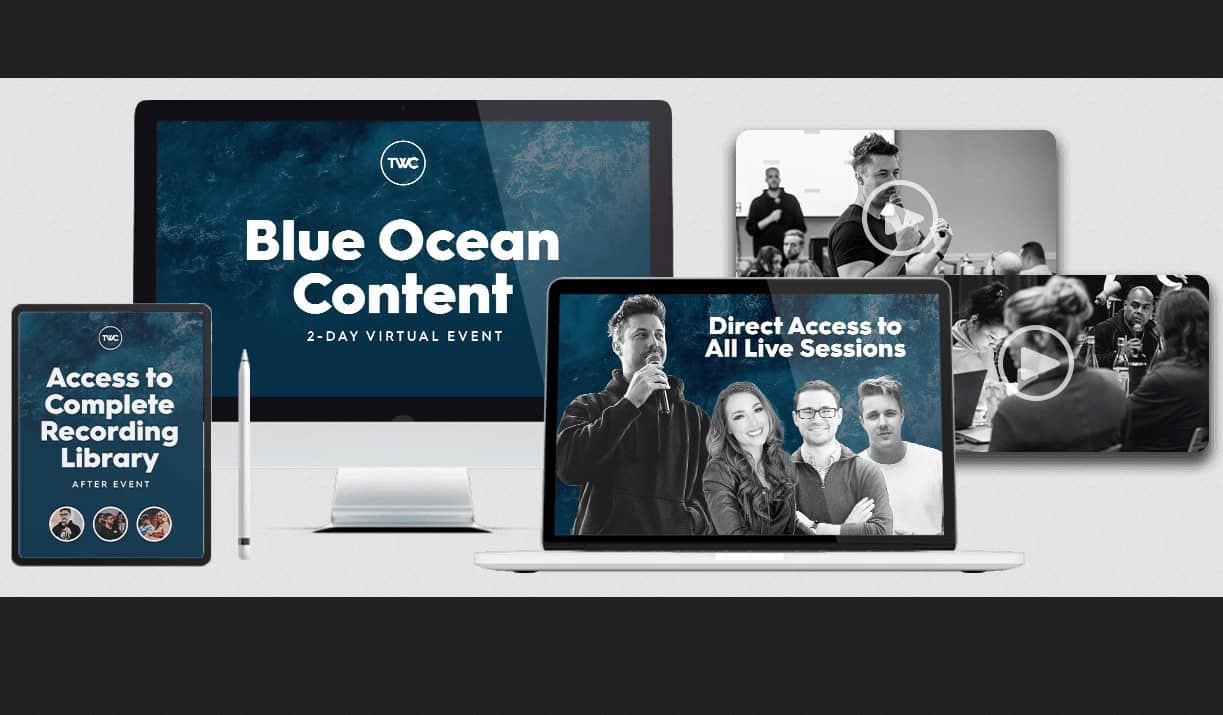
Blue Ocean Content YouTube Mastery is a $1,000 workshop by Taylor Welch that covers 8 lessons and approximately 10 hours of content on positioning, algorithm optimization, and interdisciplinary branding for YouTube. Is it worth $1,000? That is the only question that matters, and most reviews will not answer it honestly — because they have an affiliate link and you do not.
I went through all 8 lessons of Taylor Welch's Blue Ocean Content YouTube Mastery. I extracted every framework, mapped every session, and identified exactly what the workshop covers and what it leaves out. Here is the most complete, unsponsored breakdown you will find. For the independent framework-level deconstruction, see the full breakdown on Course To Action.
The short version: if you are an entrepreneur who already has expertise and wants to build a founder brand on YouTube — but cannot figure out why your videos get ignored despite covering useful topics — this workshop is the most operationally specific course in the YouTube strategy space. It reverse-engineers a real podcast that grew from 12,000 to 3–5 million monthly views. It teaches the positioning logic that most YouTube courses skip entirely. And it delivers in 10 hours what most $3,000 programs take 40 hours to convey.
It is also not a step-by-step beginner system. It has no YouTube Shorts strategy, no monetization beyond ad revenue, and a spiritual framework woven through the entire structure that some buyers will find useful and others will find jarring.
That distinction matters. Keep reading.
Course To Action is the pre-read: the thing you do before you spend $1,000 on a course, or the thing you do instead.
The Course at a Glance
| Field | Details |
|---|---|
| Course | Blue Ocean Content YouTube Mastery |
| Creator | Taylor Welch |
| Price | $1,000 |
| Content | 2-day workshop / 8 lessons / ~10 hours |
| Best For | Entrepreneurs building founder brands via YouTube with under 10K views per video |
| Core Topic | Positioning, algorithm optimization, and interdisciplinary branding for YouTube |
| Skip If | You are a complete beginner, run an e-commerce or product business, or want step-by-step modular instruction |
| Rating | ★★★★☆ — Exceptional positioning depth; gaps in Shorts, monetization, and beginner onboarding |
The Core Insight
Most YouTube creators fail not from a lack of information, but from a lack of novelty.
This is the organizing principle behind every lesson in the workshop. The core insight is that the YouTube algorithm does not reward high production value, consistent upload schedules, or even strong topic expertise in isolation — it rewards compulsive re-engagement. And compulsive re-engagement is a neurochemical phenomenon — the brain is wired to seek new patterns, to resolve unexpected juxtapositions, to linger on stimuli it cannot immediately categorize.
The mechanism Taylor Welch identifies: when a creator operates at the intersection of three unrelated fields of expertise, the resulting content produces a novelty signal the brain cannot easily dismiss. It cannot scroll past something it has never seen categorized before. Spirituality combined with business psychology combined with neuroscience is not niche content with a branding gimmick. It is a neurochemical trigger. The audience stays because their brain is genuinely searching for the resolution of a pattern it has not yet seen completed.
Welch built The Deep End podcast on this insight. The show grew from $80 per month in ad revenue to $30,000–$50,000 per month. He turned down approximately $1 million in sponsorship offers to protect the positioning. He did not do this because sponsorships are bad. He did it because protecting the novelty signal was worth more than the short-term revenue. The case study is not theoretical. The numbers are on the table.
That is a genuine paradigm shift for any creator who has been grinding out useful, well-produced videos and watching them stall at 400 views.
The Frameworks: The 20% That Delivers 80% of the Value
Not cliff notes. Full deconstructions. Here are the core frameworks Taylor Welch teaches — and how each builds on the last.
1. TAM vs. Niche × Depth Matrix (4-Quadrant Positioning)
The TAM vs. Niche × Depth Matrix is Taylor Welch's 4-quadrant positioning framework for mapping YouTube channel strategy. It plots two axes: audience size (Total Addressable Market vs. Niche) against content depth (surface-level vs. deep). Most YouTube advice pushes creators toward the top-right quadrant: find a niche, go deep. Welch argues this is the lowest-opportunity positioning for a founder brand.
The four quadrants produce four distinct strategic situations. Large audience + shallow depth = massive reach, minimal trust, commodity content. Large audience + deep depth = the Blue Ocean position Welch teaches toward. Niche audience + deep depth = authority, but growth ceiling by definition. Niche + shallow = the lowest-value quadrant regardless of production quality.
The actionable insight: Blue Ocean positioning is not about finding an underserved niche. It is about addressing a broad audience with a depth of perspective they have not seen combined before. This is the distinction most positioning frameworks miss entirely.
2. Interdisciplinary Branding (The Three-Expertise Combination)
The Interdisciplinary Branding framework is Taylor Welch's method for building a category-of-one YouTube channel by identifying three domains of genuine expertise from unrelated fields and constructing a content identity at their intersection. The steps are: (1) inventory your actual expertise across professional, intellectual, and personal history, (2) identify three fields with genuine distance between them, (3) find the coherent through-line that connects all three, (4) build content only at that intersection.
Welch's own combination: entrepreneurship, theology/spirituality, and behavioral psychology. None of these is unusual in isolation. The combination is unusual. A viewer who already consumes business content has not encountered theology applied to financial belief systems through the lens of behavioral psychology. The brain has no existing pattern to fit it into. That categorization failure is the engagement mechanism.
The Three-Column Content Organization tool operationalizes this: one column for each expertise domain, ideas flowing freely within columns, and the creative work happening in the intersections. The Interdisciplinary Branding framework is what makes this more than a brainstorming exercise — it provides the strategic logic for why the intersection matters algorithmically, not just aesthetically.
This is one of 8 frameworks in Blue Ocean Content YouTube Mastery. The complete breakdown — including the 3Cs Video Optimization templates, Linear Flow Method, and the positioning diagnostic — is on Course To Action. Free account, 10 summaries, no credit card. Or unlock all 110+ courses for $49/30 days.
3. Click-Connect-Convert
Click-Connect-Convert is Taylor Welch's three-stage audience relationship model underlying the entire content strategy. Click is the first transaction — the thumbnail and title generate enough pattern disruption to earn a click. Connect is the in-video moment when the viewer decides the content matches their expectations at a depth that earns their trust. Convert is the downstream action: subscribing, visiting a landing page, purchasing a product.
Most YouTube strategy courses conflate these stages or skip Connect entirely. Welch's argument is that Connect is where most creators lose audiences they worked hard to Click. A video can have a 4% CTR and a 30% average view duration — meaning it attracted clicks and immediately failed to deliver what the title promised at the depth required to sustain engagement. Click and Convert optimization without Connect is why high-quality creators with genuine expertise plateau.
4. 3Cs Video Optimization (Click / Commit / Connect / Convert — the 60% AVD Threshold)
The 3Cs Video Optimization system is Welch's 4-stage in-video framework for engineering 60%+ Average View Duration. The stages map directly to viewer psychology: Click (the title and thumbnail promise), Commit (first 30–60 seconds that confirm or break that promise), Connect (the emotional or intellectual hook that creates investment), Convert (the CTA that converts sustained attention into action).
The critical metric is Average View Duration (AVD). Welch's framework specifies 60% AVD as the threshold at which YouTube's recommendation algorithm shifts from limited distribution to broad algorithmic push. Below 60%, the video is tested against a sample audience and suppressed. Above 60%, the algorithm reads the video as a pattern-match for compulsive re-engagement and distributes it to audiences who have not subscribed to the channel.
The key takeaway is that optimizing a video for clicks without optimizing for completion is the equivalent of writing a function that gets called frequently but crashes before returning a value. The surface metric looks healthy. The actual output is zero.
5. Value Ad Framework (Hook 5s / Educate 1–2min / CTA 30s)
The Value Ad Framework is Welch's 3-part structural template for short-form content that feeds the channel's algorithm while building the audience toward longer-form conversion. Hook in five seconds — not a teaser, not an intro, a direct statement of the novel combination that the video will resolve. Educate for one to two minutes — the depth that makes the promise real. CTA in thirty seconds — not a soft "like and subscribe" but a specific action connected to the viewer's demonstrated interest.
The Value Ad Framework is designed specifically for the awareness layer of the funnel: content that earns attention from cold audiences who have never encountered the creator before. It is the opposite of the detailed, module-style content that works for warm subscribers who are already invested. Getting this distinction wrong is why creators often produce content that satisfies existing subscribers but fails to grow the channel.
6. Alpha AI Targeting
Alpha AI Targeting is Welch's data-environment framework for understanding how YouTube's recommendation system works and how to give it clean signals about viewer profile. The key data point: Google has data from 52.6% of websites globally, compared to Facebook's 11.1%. This is not an argument for Google ads over Facebook ads — it is an argument for understanding that YouTube operates inside the most data-rich recommendation environment available to content creators.
The framework teaches creators to structure content, titles, and metadata in ways that give YouTube's recommendation system clean signals about who should see the content — rather than optimizing for search keywords in the traditional SEO sense. The distinction is between optimizing for discovery (someone searches and finds you) and optimizing for recommendation (the algorithm surfaces you to viewers who did not know to look). At scale, recommendation dwarfs discovery.
7. TV Show Channel Framework
The TV Show Channel Framework is Welch's channel architecture model that treats a YouTube channel like a television network lineup rather than a content library. It has three components: three to four recurring content formats (equivalent to show "segments"), a consistent visual and verbal identity across all formats, and episode-to-episode references that create continuity for returning viewers.
Most YouTube channels function as content libraries — videos that can be watched in any order, on any topic within a general domain. Welch teaches the opposite model: a TV Show Channel with recurring formats, consistent character development, and a narrative continuity that rewards subscribers for watching in sequence. This dramatically changes subscriber behavior and the subscriber retention metric, both of which feed positively into algorithmic distribution.
8. Linear Flow Method
The Linear Flow Method is Welch's content planning framework for creating narrative momentum across a channel over time. Rather than planning individual videos as standalone units, it maps a series of videos as a progression — each video answering a question the previous video raised, each video creating a small open loop that resolves in the next.
This is structurally borrowed from longform storytelling and serialized fiction. The mechanism that makes audiences binge a Netflix series is the same mechanism that makes audiences watch every video from a YouTube channel in a single session. The Linear Flow Method teaches creators to deliberately engineer that mechanism into a content calendar.
What makes this different from standard content calendars is the intent: not scheduling content, but engineering narrative momentum that compels return visits.
What This Workshop Teaches Exceptionally Well
The case study is real and the numbers are specific. The Deep End's growth from 12,000 to 3–5 million monthly views is not a hypothetical. The $80-to-$50K monthly ad revenue trajectory is documented. The decision to turn down approximately $1 million in sponsorships to protect positioning is verifiable. This is not a framework built on theory. It is a framework reverse-engineered from a documented outcome, then taught by the person who produced that outcome alongside his producer Jake. The positioning logic is genuinely original. The TAM vs. Niche × Depth Matrix and the Interdisciplinary Branding framework are the two tools in this workshop that you will not find in standard YouTube strategy content. Most YouTube courses teach thumbnails, upload frequency, and keyword research. Welch teaches why certain creators become impossible to ignore while technically superior creators remain invisible. The mechanism — novelty as a neurochemical trigger, interdisciplinary combination as a novelty engine — is explained with enough precision to be actionable. The title rewrite example is worth the price of the workshop on its own. A participant's video titled "Boardroom Podcast S3E10" was rewritten to "How Landlords Trap Rich People." CTR went from 0.9% to a level that earned algorithmic distribution. The rewrite demonstrates the entire Click-Connect-Convert framework in a single before-and-after. If you have a library of videos with titles that prioritize accuracy over compulsive curiosity, this single framework will pay for the workshop immediately. The 60% AVD threshold is specific and actionable. Most YouTube growth advice is directionally correct but operationally vague. "Make longer videos" or "hook viewers in the first 15 seconds" are not frameworks — they are advice. The 60% AVD threshold gives creators a specific metric to optimize for, a specific mechanism explaining why that threshold matters, and a specific diagnostic for understanding where their current videos fall short of it.Get Every Framework from Blue Ocean Content YouTube Mastery
The course costs $$1,000. The complete breakdown is $49/year.
Start free — 10 full summaries, no credit card
What This Workshop Does Not Cover
We tell you what the course DOESN'T cover. No other review does this.
There is no YouTube Shorts strategy. The workshop is built entirely around longform content. If your channel is building around Shorts, or if you are using Shorts as a primary discovery mechanism for longform content, this workshop does not address that. This is a significant gap given that Shorts are increasingly central to how channels grow initial audiences before transitioning viewers to longform. Monetization beyond ad revenue is not covered. The workshop references ad revenue and mentions the channel's progression from $80 to $50K per month in ad income. It does not teach course launches, coaching offers, product sales, or newsletter monetization from YouTube audiences. If your goal is to use YouTube as a client acquisition or lead generation tool for a service business, the monetization layer requires supplementation from other sources. Complete beginners will struggle. The workshop is described accurately as advanced. It assumes you have a business, a point of view, and some existing content. If you have never uploaded a video, the frameworks will be intellectually clear but practically difficult to implement without additional context about the basics of the platform. The spiritual framework is integrated, not optional. Taylor Welch's approach to entrepreneurship is explicitly faith-aligned. Belief Architecture, spiritual frameworks for confidence, and theological references appear throughout the workshop. This is not background flavor — it is woven into the core frameworks. Buyers who prefer a purely secular business framework will find this friction throughout, not occasionally. E-commerce and product businesses are explicitly excluded. The workshop is built for founder brands: creators whose content is themselves, their ideas, and their expertise. If your YouTube channel is supporting a physical product, a software product, or an e-commerce store, the positioning frameworks do not translate. The TAM vs. Niche × Depth Matrix is built for personal authority channels, not brand channels.The main limitation is the absence of any Shorts strategy or service-business monetization guidance — both of which are central to how many entrepreneurs actually use YouTube today.
Who This Workshop Is Actually For
This is best suited for entrepreneurs, consultants, coaches, or service providers who have tried YouTube and hit a ceiling below 10,000 views per video despite producing what they believe is high-quality content.
You are the right person for Blue Ocean Content YouTube Mastery if you can say yes to most of these:
- You are an entrepreneur, consultant, coach, or service provider who has tried YouTube and hit a ceiling below 10,000 views per video despite producing what you believe is high-quality content.
- You have genuine expertise in more than one domain — business, psychology, spirituality, finance, health, technology — and you have never found a coherent way to combine them into a single content identity.
- You understand the concept of positioning but have never seen it applied at the algorithmic level: not just "find your niche" but "engineer compulsive engagement through interdisciplinary novelty."
- You are building a founder brand — content where your name, your perspective, and your worldview are the product — rather than a brand channel supporting a separate business.
- You are willing to work within a faith-aligned framework and find the integration of spirituality with business strategy useful rather than distracting.
- You prefer concentrated, high-density workshops over sprawling modular courses. Ten hours of material you actually implement is worth more to you than forty hours of material you finish but do not use.
Who Should Skip This Workshop
Be honest with yourself about these:
- You are a complete beginner to YouTube. The frameworks here are not introductory. They assume you know what a thumbnail is, what average view duration means, and how YouTube Studio analytics work.
- Your business is e-commerce, software-as-a-product, or physical products. The founder brand framework does not map onto brand channels.
- You are looking for a YouTube Shorts strategy. This workshop does not cover it.
- You want a purely secular business framework. The spiritual and faith-aligned dimensions are integrated throughout and cannot be separated.
- You need detailed monetization instruction beyond ad revenue. The workshop is about growth, not about converting that growth into income beyond the algorithm's direct payments.
- You want step-by-step modular instruction with clear assignments and checklists. The workshop format is live, dense, and conceptual. Implementation requires translating the frameworks yourself.
The Verdict
Blue Ocean Content YouTube Mastery is exceptional at what it does: teaching the positioning, neurochemical, and algorithmic logic that explains why certain channels grow exponentially while technically superior channels plateau. The Interdisciplinary Branding framework, the TAM vs. Niche × Depth Matrix, the 60% AVD threshold, and the title rewrite methodology are the four pieces of this workshop that justify the price for any entrepreneur who has been stuck under 10,000 views despite real effort and genuine expertise.
The case study is the strongest proof-of-concept in the YouTube education space: a real show, a documented growth trajectory, a specific revenue progression, and a producer who was inside the process. This is not a course built on Taylor Welch's opinion about what should work. It is a framework built on what did work, at scale, with receipts.
The gaps are real and worth naming: no Shorts strategy, no service-business monetization, no beginner onboarding, and a spiritual framework that some buyers will find essential and others will find misaligned. None of these gaps invalidate the positioning frameworks. They define the buyer profile precisely.
In summary: Blue Ocean Content YouTube Mastery earns a strong recommendation for experienced entrepreneurs building founder brands on YouTube. The positioning frameworks are genuinely original and the case study is verifiable. The gaps are real but predictable, and they precisely define who should and should not buy this workshop.
Buy it if: You are an entrepreneur with genuine expertise in multiple domains, you have tried YouTube and stalled below 10,000 views, and you understand that your problem is positioning and novelty rather than production quality or upload frequency. Skip it if: You are pre-YouTube, running a product business, looking for a Shorts strategy, or want a faith-neutral framework.Before you spend $1,000, read the full breakdown on Course To Action. Free account — 10 summaries, AI credits, no credit card. Or get all 110+ premium courses, audio summaries, and the 'Apply to My Business' AI tool for $49/30 days. One payment, no auto-renewal.
The AI has read the entire workshop — tell it about your YouTube channel and get a custom positioning strategy.
Read the summary or listen to the audio version — your call.
Course To Action publishes independent framework-level breakdowns of online courses — the 20% that delivers 80% of the value, so you can make an informed decision before you spend a dollar.
Frequently Asked Questions
Is Blue Ocean Content YouTube Mastery worth $1,000?For entrepreneurs who have tried YouTube and stalled below 10,000 views per video despite genuine effort and expertise, yes. The Interdisciplinary Branding framework and the TAM vs. Niche × Depth Matrix address the positioning problem that most YouTube courses skip entirely. For beginners, product businesses, or creators looking for a Shorts strategy, the fit is poor regardless of price.
What does Blue Ocean Content YouTube Mastery actually teach?The workshop teaches 8 frameworks across approximately 10 hours: the TAM vs. Niche × Depth Matrix, Interdisciplinary Branding, Click-Connect-Convert, 3Cs Video Optimization, Value Ad Framework, Alpha AI Targeting, TV Show Channel Framework, and Linear Flow Method. The organizing thesis is that novelty — not information quality — drives algorithmic distribution, and that interdisciplinary branding is the mechanism for engineering genuine novelty.
What does Blue Ocean Content YouTube Mastery NOT cover?YouTube Shorts strategy, monetization beyond ad revenue (no course launches, coaching funnels, or affiliate structures), beginner YouTube basics, secular/faith-neutral frameworks (the spiritual dimension is integrated throughout), and e-commerce or product business channel strategy. These gaps define the buyer profile precisely.
Does Blue Ocean Content YouTube Mastery include a YouTube Shorts strategy?No. The workshop is built entirely around longform YouTube content. Taylor Welch and producer Jake reverse-engineer The Deep End podcast's growth as a longform content property. If Shorts are central to your current strategy or channel architecture, this workshop does not address that dimension.
Is this workshop suitable for someone who has never uploaded a YouTube video?Welch positions this explicitly as an advanced workshop. The frameworks assume you understand how YouTube analytics work, have at least some sense of your content identity, and have a business or expertise worth building a channel around. Complete beginners will find the frameworks intellectually clear but practically difficult to implement without foundational YouTube literacy.
How does the Interdisciplinary Branding framework differ from standard niche advice?Standard niche advice tells you to narrow your focus and go deep in one area. Interdisciplinary Branding instructs the opposite: combine three unrelated areas of genuine expertise and build your content identity at their intersection. The strategic rationale is neurochemical — the brain cannot scroll past content that does not fit an existing pattern. A creator who combines theology, behavioral psychology, and entrepreneurship produces a novelty signal a niche creator cannot replicate, regardless of production quality.
What is the 60% AVD threshold and why does it matter?Average View Duration (AVD) measures what percentage of a video the average viewer watches. The 60% threshold is the specific benchmark at which YouTube's recommendation algorithm shifts from limited-audience testing to broad algorithmic distribution. Below 60%, the algorithm treats the video as a pattern-match failure and suppresses it. Above 60%, the algorithm reads it as compulsively re-engaging and pushes it to audiences who have not subscribed to the channel.
Does the workshop cover how to monetize a YouTube audience beyond ad revenue?No. The workshop documents The Deep End's ad revenue growth as a proof-of-concept for the positioning strategy. It does not teach how to structure product offers, coaching programs, courses, or service funnels from YouTube traffic.
Where can I read a full summary of Blue Ocean Content YouTube Mastery?The independent framework-level breakdown is available at Course To Action. Start with a free account (10 summaries + AI credits, no credit card required) or unlock 110+ premium courses — with audio and our 'Apply to My Business' AI tool — for $49/30 days (no auto-renewal). The workshop costs $1,000. Read what it teaches AND what it doesn't before you spend that.
Read the Complete Blue Ocean Content YouTube Mastery Summary
The course costs $$1,000. The full breakdown is $49/year — for every course on the platform.
Every framework deconstructed, every action step extracted, AI that applies it to your specific business. Read or listen — every summary has audio.
Start free — 10 full summaries, no credit card required