Financial Optimization Strategies for Small Business Owners Review (2026): Every Framework, Honest Limitations
Price: $1,997 | Lessons: 17 | Creator: Kelsa DickeyFinancial Optimization Strategies for Small Business Owners is a $1,997 course by Kelsa Dickey that teaches financial coaches a structured, framework-driven methodology for working with small business clients on pricing, revenue optimization, KPIs, and cash flow. It is built around 17 lessons and covers 7 named frameworks, including the Education-Application-Commitment (EAC) coaching protocol and the Three-Tier Break-Even Analysis. If you have been looking for a repeatable system to bring financial coaching into business client work, this course is worth a close look according to the full breakdown on Course To Action.
This review covers what the course actually teaches, who it is genuinely well-suited for, where it falls short, and whether the $1,997 price tag is justified. No fluff, no affiliate cheerleading — just a clear look at what you are buying.
What the Course Claims to Teach
According to Dickey, most business owners who feel like financial failures are not undisciplined or bad with money. They have a structural pricing problem. The core insight is that once you separate personal and business finances and run a proper break-even calculation, the path forward becomes much clearer.
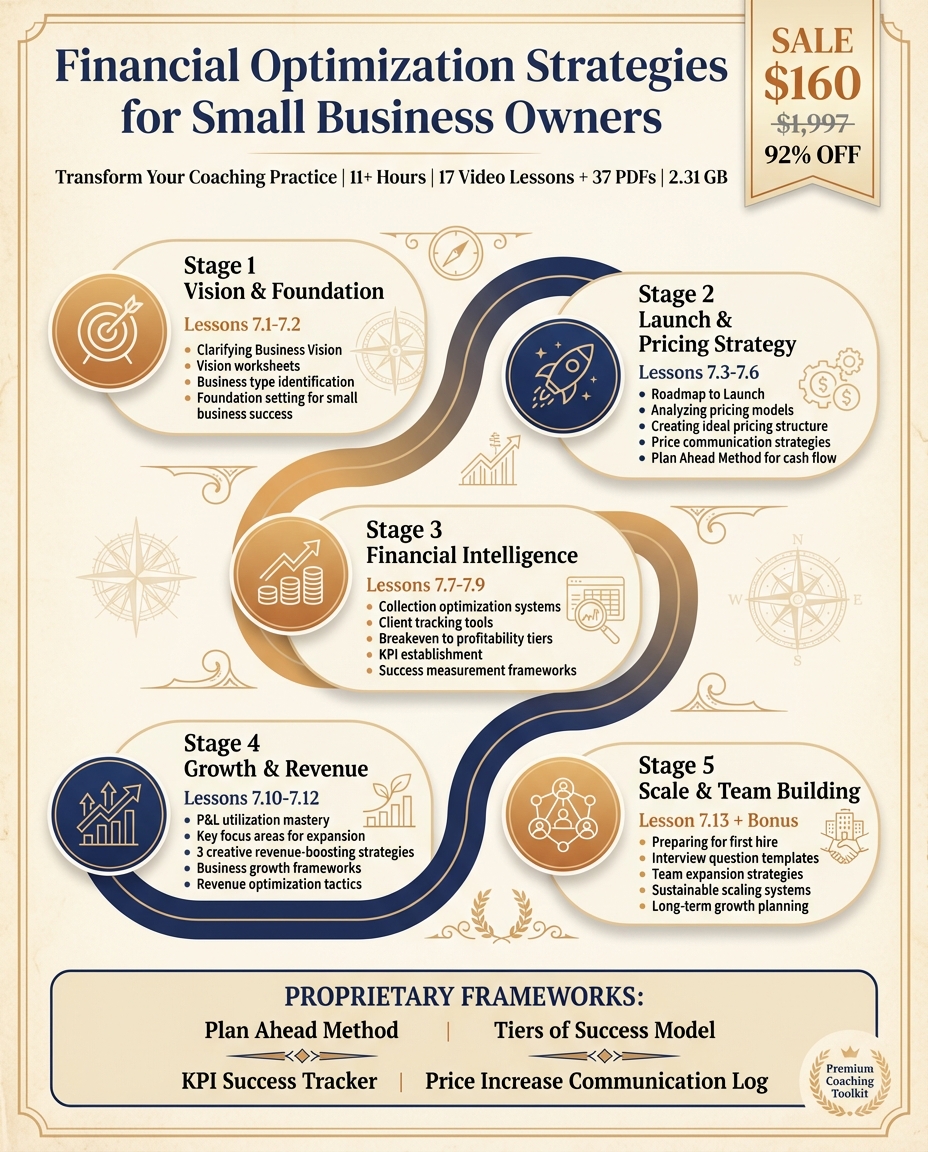
The 17-lesson curriculum teaches coaches to walk business clients through:
- Pricing analysis and break-even modeling
- Revenue optimization using what Dickey calls the Three Creative Revenue Strategies
- Hiring decisions and their cash flow implications
- Key performance indicators (KPIs) using a 7-step process
- Cash flow management with the Plan Ahead Method budget
Core Frameworks: A Closer Look
The course is framework-heavy, which is both its strength and its limitation depending on what you need.
Education-Application-Commitment (EAC)
The Education-Application-Commitment (EAC) framework is Kelsa Dickey's 3-phase coaching protocol for structuring financial conversations. The phases are: Education (teaching the concept), Application (applying it to the client's specific numbers), and Commitment (securing a specific action before the session ends). For coaches who have struggled to move money conversations forward, this structure is genuinely useful. What makes this different is that EAC turns a loose coaching session into a repeatable protocol with a defined output.
Three-Tier Break-Even Analysis
The Three-Tier Break-Even Analysis is Kelsa Dickey's 3-level diagnostic for revealing structural pricing problems. The tiers are: Cash Flow Break-Even (what it takes to keep the lights on), Goal Break-Even (what it takes to hit personal financial goals), and Stretch Break-Even (aspirational targets). Presenting break-even at three tiers rather than one number is a practical coaching tool — it gives clients a range to aim for rather than a single pass/fail line.
Three Creative Revenue Strategies
The Three Creative Revenue Strategies is Kelsa Dickey's compounding growth framework built around three levers: increasing prices by 10%, increasing number of clients by 10%, and increasing retention by 10%. The key takeaway is that these 10% improvements compound into roughly 33% revenue growth without requiring entirely new products or markets.
Nine Indicators for Raising Prices
One of the more concrete deliverables in the course. Dickey provides a checklist of nine signals that indicate a service-based business is ready for a price increase — spanning demand signals, market positioning, client retention, value delivery, and competitive landscape. Coaches can use this directly in client sessions rather than relying on instinct.
Key Focus Areas Assessment
A 9-area business scorecard coaches can use to identify where a client's business is structurally weak. This serves as a diagnostic entry point before diving into numbers.
7-Step KPI Process
The 7-Step KPI Process is Kelsa Dickey's repeatable method for helping clients choose and track meaningful metrics rather than vanity numbers. Given that most small business owners track revenue and not much else, this section addresses a real gap.
Financial Optimization Strategies for Small Business Owners teaches 7 frameworks across 17 lessons: EAC (Emotional Accounting Cycle), Three-Tier Break-Even, Three Creative Revenue Strategies, Nine Indicators for Raising Prices, Key Focus Areas Assessment, 7-Step KPI Process, and the Plan Ahead Method. The complete breakdown of every framework and every limitation is on Course To Action — free to start, no credit card required. The course is $1,997. A Course To Action membership starts at $49 for 30 days.
What Works Well
The EAC framework genuinely solves a real problem. Many financial coaches are confident with numbers but uncomfortable holding a client accountable through a difficult money conversation. The Education-Application-Commitment structure gives them a repeatable script that does not feel scripted. The most important framework is arguably EAC — it is the most transferable tool in the course. The break-even methodology is honest and practical. The Three-Tier Break-Even approach removes a lot of the subjectivity from pricing conversations. Instead of asking a client "what do you think you should charge," a coach can work through the math and let the numbers surface the answer. This shifts the dynamic from opinion to evidence. Dickey's framing of the core problem is correct. The insight that most struggling business owners have a structural pricing problem rather than a discipline problem is not just motivating — it is accurate. It also gives coaches a way to reframe conversations that might otherwise feel like personal criticism. This framing alone can change how a coach enters a client relationship. The course is organized for immediate use. The frameworks are presented in a sequence that mirrors how a coaching engagement typically unfolds — assessment, diagnosis, pricing, revenue, KPIs, hiring, cash flow. Coaches can follow the course structure as a rough template for their client work.Where the Course Falls Short
This is coach training, not a business finance course for owners. The main limitation is that if you are a small business owner hoping to apply this content directly to your own situation, the format will feel indirect. Dickey is teaching coaches how to guide clients through these frameworks, not teaching business owners how to implement them independently. The distinction matters. No marketing or sales content. Revenue optimization is only as useful as the pipeline that feeds it. The course does not address client acquisition, lead generation, or sales conversion. If a business owner's primary problem is not enough clients, this course will not help. The content is US-centric. Structural references — tax categories, business entity types, financial benchmarks — are built around US business norms. Coaches working with clients in other markets will need to adapt. No tax or legal guidance. The course explicitly stays out of tax strategy and legal structure. For some coaches, that is appropriate scope management. For others, it means they will still need to refer clients to CPAs and attorneys for significant decisions. Seventeen lessons is relatively lean for $1,997. The frameworks are solid, but coaches who want deep dives into edge cases, difficult client scenarios, or industry-specific applications will find the content thinner than they might expect at this price point.Get Every Framework from This Course
The course costs $1997. The complete breakdown is $49/year.
Start free — 10 full summaries, no credit card
Who This Course Is Best For
This is best suited for:
- Financial coaches who currently work with individuals and want to expand into business clients. The course bridges personal finance coaching methodology with business finance concepts in a way that feels like a natural extension rather than a pivot.
- Coaches who are confident with numbers but struggle to structure client conversations. The EAC framework directly addresses the gap between knowing the concepts and knowing how to coach around them.
- Service-based business owners who work closely with a financial coach. If an owner is already in a coaching relationship and their coach completes this training, they will benefit indirectly from the tools and frameworks.
Who Should Look Elsewhere
This course is not a fit for:
- Coaches primarily interested in marketing or sales training. The course is entirely focused on financial structure and cash flow.
- E-commerce businesses operating at scale. The frameworks are designed for service-based businesses. Inventory, cost of goods, and fulfillment complexity are not addressed.
- Anyone expecting tax advice, legal structure guidance, or investment strategy. Dickey is clear about scope, and it does not extend into those areas.
- Non-US coaches working in markets with significantly different regulatory environments. Adaptation is possible but will require additional research.
Is the Price Justified?
$1,997 is a meaningful investment, and whether it is justified depends heavily on how a coach intends to use the material.
For a financial coach who is actively trying to add business clients to their practice, the frameworks — particularly EAC and the Three-Tier Break-Even — can be integrated into client engagements immediately. If adding business clients allows a coach to raise their rates or take on more premium clients, the course can pay for itself relatively quickly.
For a coach who is exploring whether business client work is something they want to pursue, $1,997 is a significant amount to spend on exploration. A clearer picture of the target use case would be worth developing before purchasing.
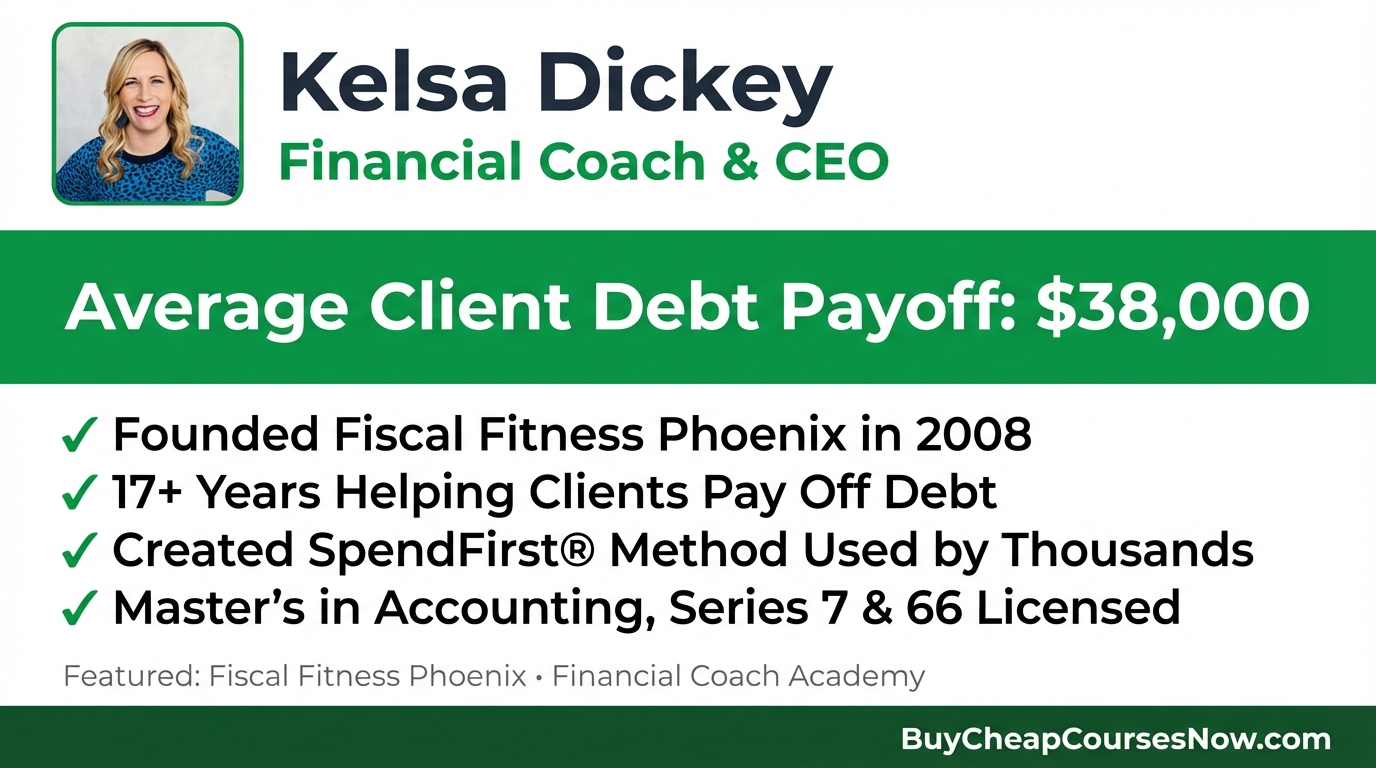
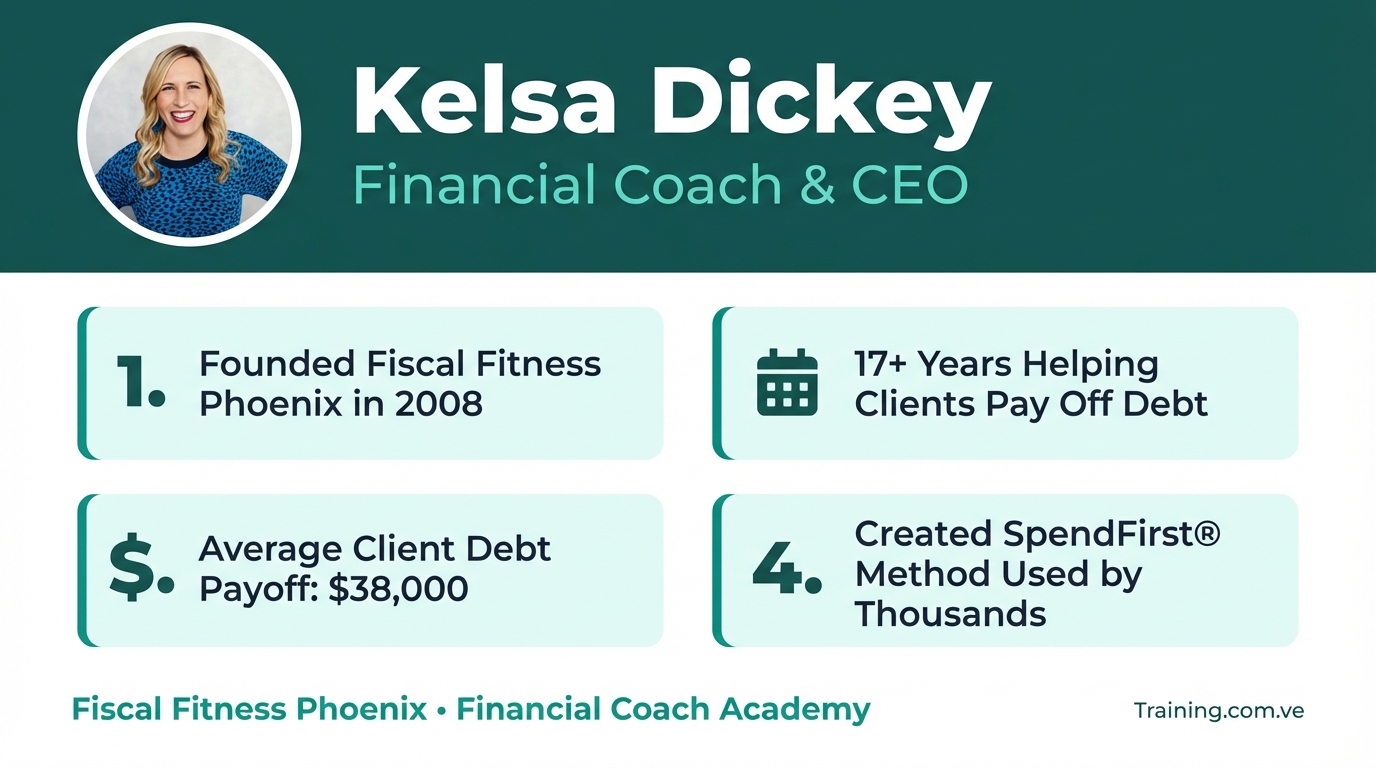
In summary, Dickey has 12 years in financial coaching and also teaches "Coaching on Advanced Topics in Personal Finance," which suggests the business course draws from a genuinely deep body of experience rather than a thin repurposing of general content.
Frequently Asked Questions
Is Financial Optimization Strategies for Small Business Owners worth $1,997?
For financial coaches actively expanding into business clients, yes. The EAC framework and Three-Tier Break-Even Analysis provide immediately usable tools for client engagements. If adding business clients allows you to charge premium rates, the course can pay for itself within the first month. For coaches still exploring the idea, the price may be high for exploration. Before spending $1,997, you can access the full framework breakdown on Course To Action for free — 10 free summaries, no credit card required — and use the AI "Apply to My Business" tool to see how these frameworks apply to your specific situation before you commit.
What does Financial Optimization Strategies for Small Business Owners actually teach?
The course teaches 7 named frameworks across 17 lessons: Education-Application-Commitment (EAC), Three-Tier Break-Even, Three Creative Revenue Strategies, Nine Indicators for Raising Prices, Key Focus Areas Assessment, 7-Step KPI Process, and the Plan Ahead Method budget. All are designed for coaches to use with small business clients.
What does Financial Optimization Strategies for Small Business Owners NOT cover?
The course does not cover marketing, sales, lead generation, tax strategy, legal structure, investment strategy, or e-commerce operations. It is entirely focused on financial clarity, pricing structure, and business health metrics. It is also US-centric in its examples and regulatory references.
Who is Financial Optimization Strategies for Small Business Owners best for?
Financial coaches who currently work with individuals and want a structured system for expanding into business clients. Also strong for coaches who know the financial concepts but need a repeatable conversation framework (EAC) to move clients from understanding to action.
How does Financial Optimization Strategies for Small Business Owners compare to general business coaching courses?
Unlike broad business coaching programs, this course is narrowly focused on financial structure and pricing. It does not cover marketing, sales, or operations. Its strength is depth on a specific problem — structural pricing misalignment — rather than breadth across business topics.
Where can I read a full breakdown of Financial Optimization Strategies for Small Business Owners?
The independent, framework-level course deconstruction is available at Course To Action, covering every named framework, honest limitations, and what the course does not teach.
Final Verdict
Financial Optimization Strategies for Small Business Owners is a focused, framework-driven course that solves a specific problem well: it gives financial coaches a structured methodology for working with business clients on pricing, revenue, and cash flow. The EAC framework and Three-Tier Break-Even model are the standout tools, and Dickey's core insight — that most struggling business owners have a pricing problem, not a discipline problem — is a useful reframe that coaches can carry into every client relationship.
The limitations are real: it is coach training rather than direct business advice, it skips marketing and sales entirely, and the lesson count is lean for the price. But if the use case fits — a financial coach expanding into business clients — the course delivers a practical, immediately usable system.
Start free — no credit card required. Course To Action gives you 10 free summaries so you can read the full breakdown of all 7 frameworks in Financial Optimization Strategies for Small Business Owners — EAC (Emotional Accounting Cycle), Three-Tier Break-Even, Three Creative Revenue Strategies, Nine Indicators for Raising Prices, Key Focus Areas Assessment, 7-Step KPI Process, and the Plan Ahead Method — before you spend a dollar.
Once you're inside, the AI "Apply to My Business" tool (3 credits) lets you apply any framework — run the Three-Tier Break-Even against your actual numbers, or use the Nine Indicators to evaluate whether your pricing is ready for an increase — to your specific situation. Every summary and every lesson also has audio if you'd rather listen.
Course To Action covers 110+ premium courses. Membership is $49 for 30 days or $399/year — one payment, no subscription, no auto-renewal.
Start free at Course To ActionCourse To Action publishes independent framework-level breakdowns of online courses — the 20% that delivers 80% of the value, so you can make an informed decision before you spend a dollar.
Read the Complete Summary
The course costs $1997. The full breakdown is $49/year — for every course on the platform.
Every framework deconstructed, every action step extracted, AI that applies it to your specific business. Read or listen — every summary has audio.
Start free — 10 full summaries, no credit card required