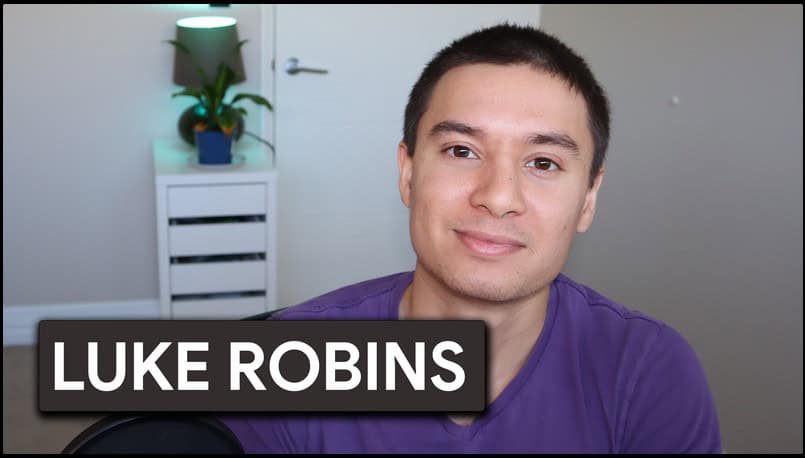
The Art of YouTube Storytelling by Luke Robins Review (2026): Is It Worth $197?
Is The Art of YouTube Storytelling worth $197? That depends entirely on what you are trying to fix.
If your YouTube videos are technically competent — decent audio, clear explanations, solid information — but your retention graph looks like a ski slope, this course is almost certainly diagnosing the right problem. Luke Robins built a 26-lesson scripting system around one deceptively simple insight: most educational YouTubers present information in the order that makes sense to the teacher, not in the order that keeps a viewer watching. The fix is structural, not cosmetic.
That said, $197 is not a small ask for a course that covers exactly one part of the YouTube production pipeline. This review breaks down every major framework, names the genuine gaps, and tells you exactly who should buy it and who should save their money. Not cliff notes. A full deconstruction. The complete curriculum is free to explore at coursetoaction.com — 10 summaries free, no credit card required.
Course At A Glance
| Creator | Luke Robins |
| Price | $197 |
| Lessons | 26 |
| Difficulty | Beginner |
| Category | Content Creation & YouTube |
| Best for | Educational YouTubers struggling with retention, creators who feel like their videos are lectures, anyone building a repeatable scripting process |
| Skip if | You make vlogs, comedy, or entertainment content; you want camera/editing/SEO help; you already have strong retention metrics |
The Core Insight: You Are Teaching in the Wrong Order
The central argument of this course is not about storytelling in the flowery, creative writing sense. It is about information architecture.
Robins argues that most educational YouTube creators structure their videos the way a teacher would structure a lesson plan: introduce the topic, explain the concept, provide examples, summarize. This is the order that makes logical sense to someone who already understands the material. The problem is that a viewer who has not yet been given a reason to care will click away before the payoff arrives.
The fix Robins teaches is reversing the order of information. Lead with the context — the conflict, the stakes, the surprising outcome — and let the lesson emerge from that story rather than preceding it. A video that opens with "today I will teach you about keyword research" loses. A video that opens with "I posted a video to a 4,000-subscriber channel and it hit 235,000 views — here is the one thing I changed in the script" wins. Same information. Different sequence. Dramatically different retention.
This is the structural change that sits underneath every framework in the course.
The Frameworks: Where the Course Earns Its Price
This is one of 8 frameworks in The Art of YouTube Storytelling. The complete breakdown — every framework, every limitation — is available on Course To Action. Start free, no credit card required.
The Story Bank System
This is one of the most practically useful components of the course for creators who script regularly. The Story Bank is a structured repository of personal experiences, anecdotes, case studies, and analogies that a creator can draw from when scripting. Robins pairs this with a Hook-Story/Analogy-Lesson structure that shows you how to deploy story bank material efficiently. When combined with the ChatGPT prompts Robins provides throughout the course, the Story Bank dramatically reduces the time from blank page to complete script.
The problem it solves is real: most educational creators reach for a story in the moment of scripting and come up empty, which forces filler content or dry explanation. The Story Bank is built before you need it — a habit of collection that pays off every time you sit down to write. Robins teaches a specific categorization system so that stories, analogies, and case studies are findable and slottable into the Four-Part Script Structure rather than buried in disorganized notes.
The course also covers: Four-Part Script Structure, NESB Framework, 5-Step Educational Story Framework, A-Plot/B-Plot Retention Technique, 80/20 Content Mix Strategy, Dan Harmon's Story Circle, and Cinderella Story Structure. Full framework breakdowns are at coursetoaction.com/.
What This Course Teaches Well
The reversed order of information, applied concretely. Robins does not just state the principle — he walks through before-and-after script comparisons that make the structural difference visible. This is the 20% of the course that delivers 80% of the value. A repeatable scripting system with AI integration. The ChatGPT prompts distributed throughout the lessons are specific and functional. Creators are not being told to "use AI" in a vague way — they are given prompts that slot directly into the Four-Part Script Structure. For anyone who struggles with the blank page problem, this alone justifies serious consideration. The 80/20 content mix strategy. Robins teaches a content portfolio approach: roughly 80% of your videos should be reliable, lower-effort "easy" content that serves your existing audience, while 20% are higher-production "hero" videos designed to reach new viewers. This framework gives small-channel creators a sustainable publishing cadence without burning out chasing virality on every upload.Get Every Framework from The Art of YouTube Storytelling
The course costs $$197. The complete breakdown is $49/year.
Start free — 10 full summaries, no credit card
What This Course Does Not Cover
We tell you what the course DOESN'T cover — because that is what determines whether it is the right purchase for you right now.
Filming, lighting, and camera work. Zero coverage. If your production quality is the barrier, this course will not help. Video editing. Not addressed. Robins' system ends at the script. SEO, thumbnails, and channel strategy. The packaging section touches on titles and thumbnails at a conceptual level, but there is no keyword research methodology, no thumbnail design process, and no channel-level strategy content. Niche versatility. Every example in the course comes from the business and money-making niche. Creators in health, technology, education, or other verticals will need to do the translation work themselves. Advanced retention tactics. If you already have a well-structured channel with solid retention metrics, the material here will feel foundational rather than incremental.Some lessons are also notably short, and the TikTok and affiliate marketing content included in the course feels tangential to the core scripting system.
Who This Course Is Actually For
- Educational YouTubers whose videos feel like lectures and whose retention graphs confirm it
- Creators with genuine subject-matter expertise who cannot figure out why their videos are not growing
- Anyone who has started using ChatGPT for scripting but does not have a structural framework to prompt against
- Small-channel creators (under 10K subscribers) who want a repeatable system before they scale production
- Creators who have been told their content is "good" but whose analytics disagree
Who Should Skip It
- Entertainment creators, vloggers, and comedy channels — the frameworks here are built specifically for educational content
- Creators whose primary bottleneck is production quality, not script structure
- Advanced YouTubers who already run structured scripting processes and have retention metrics to prove it
- Anyone looking for a complete YouTube growth course — this is a scripting course, not a channel-building course
The Verdict
The Art of YouTube Storytelling earns its price for a specific type of creator: someone making educational content who suspects the problem is structural rather than superficial. The reversed order of information framework is genuinely valuable. The NESB checklist, the Four-Part Script Structure, and the Story Bank system give creators a complete scripting workflow that most people in this space are currently improvising.
The limitations are real but predictable. This is not a YouTube business course. It is not a production course. It is a scripting course, and within that scope it is thorough and well-constructed.
If your videos have the right information but the wrong structure, $197 is a reasonable investment. If you need help with anything that happens outside of a script document, look elsewhere first.
Before you spend $197 on The Art of YouTube Storytelling, read the full breakdown. Course To Action covers 110+ premium courses — every one with structured summaries, audio for every lesson, and AI tools including "Apply to My Business" and "Generate Action Plan." Start free with 10 summaries, no credit card required. Full access is $49 for 30 days or $399/year, one payment, no auto-renewal. Read the full breakdown at Course To Action.
Frequently Asked Questions
Is The Art of YouTube Storytelling good for beginners? Yes. The course is rated beginner difficulty and Robins explains every framework from first principles. New creators will find the Four-Part Script Structure and NESB checklist immediately actionable. That said, creators who have never published a YouTube video may want to pair this with a broader YouTube fundamentals course, since scripting is only one component of the production process. Does the course cover thumbnails and SEO? Not in any depth. The packaging section addresses titles and thumbnails at a conceptual level — what makes a promise compelling — but there is no thumbnail design workflow and no keyword research methodology. For SEO and thumbnail strategy, you will need a separate resource. Does Luke Robins teach how to use ChatGPT for scriptwriting? Yes, and this is one of the course's genuine strengths. Robins provides specific ChatGPT prompts that integrate with his scripting frameworks. These are not generic "use AI to write your script" suggestions — they are structured prompts designed to fit the Four-Part Script Structure and the Story Bank System. Is the course worth it if I am not in the business or money niche? Probably, but with a caveat. Every example Robins uses comes from the business and money-making space. The underlying frameworks — reversed information order, NESB, the A-Plot/B-Plot technique — transfer to any educational niche. But you will need to do the translation work yourself, since there are no examples from health, technology, education, or other verticals. What is the Story Bank System and why does it matter? The Story Bank is a structured collection of personal experiences, anecdotes, case studies, and analogies that you build over time and draw from when scripting. Rather than starting each video from scratch trying to remember relevant stories, you have a searchable library. Robins pairs it with a Hook-Story-Lesson structure and ChatGPT prompts, which makes it one of the most time-saving components of the course for creators who publish regularly.Read the Complete The Art of YouTube Storytelling Summary
The course costs $$197. The full breakdown is $49/year — for every course on the platform.
Every framework deconstructed, every action step extracted, AI that applies it to your specific business. Read or listen — every summary has audio.
Start free — 10 full summaries, no credit card required